Written by Patrick Baaklini
Lebanon today finds itself at the center of two diplomatic tracks that appear, at least on the surface, to pursue the same objective: preventing another devastating war with Israel. Yet beneath this apparent convergence lies a fundamental contradiction. Lebanon is negotiating through its official institutions, while Hezbollah continues to maintain its own military capabilities and its own strategic vision of Lebanon’s security. The central challenge is therefore not only diplomatic; it is a question of sovereignty, authority, and the ability of the Lebanese state to control decisions of war and peace.
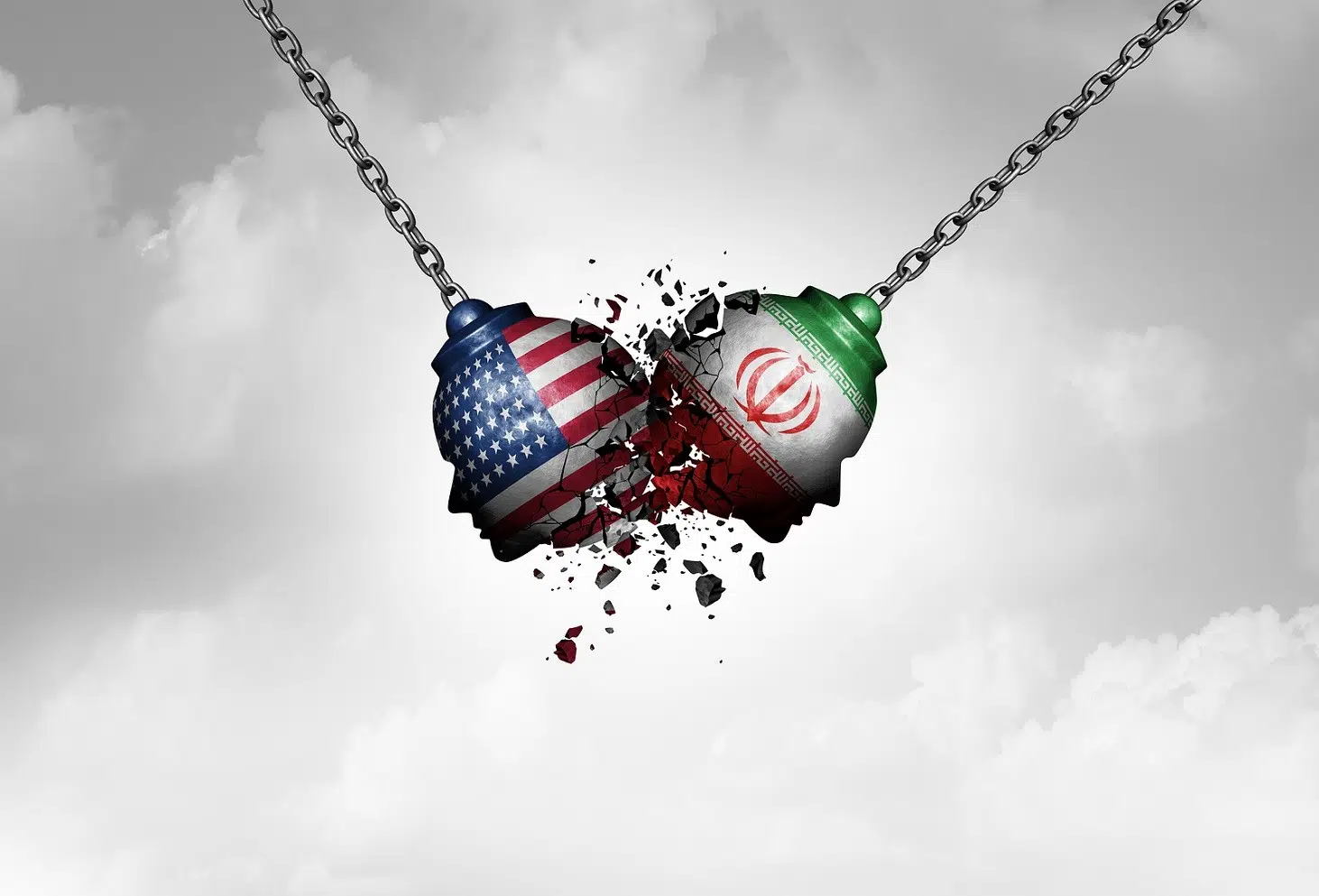
To understand this dilemma, it is necessary to distinguish between two interconnected but separate diplomatic processes: the Lebanese-Israeli negotiation framework, and the broader U.S.-Iran diplomatic process.
The experience of United Nations Security Council Resolution 1701 illustrates the difficulty of resolving this contradiction. Adopted after the 2006 war, the resolution called for the disarmament of armed groups in Lebanon and the establishment of an area in southern Lebanon free of weapons except those belonging to the Lebanese Armed Forces and UNIFIL. Nearly two decades later, the central challenge remains unresolved: Lebanon has not established a complete monopoly over armed force.
The problem is not only political; it is practical. The international community expects the Lebanese state to restore full sovereignty over its territory, but achieving this objective involves a reality that is often underestimated from abroad: Lebanon cannot treat this as a purely military challenge.
The Two Tracks
The first track is the Lebanese-Israeli negotiation process, established through a U.S.-brokered trilateral framework involving Lebanon, Israel, and the United States. The framework is built around a fundamental principle: Lebanese sovereignty must be restored through the exclusive authority of the Lebanese state over security and defense decisions. Under this framework, Lebanon commits to strengthening the role of its state institutions, including its security forces, and addressing the presence of armed groups operating outside state control. The objective is to establish a security environment in which decisions regarding military action and conflict belong exclusively to the Lebanese state.
Israel, for its part, links the reduction of its military presence and the establishment of a new security arrangement along the border to the elimination of threats posed by non-state armed groups, particularly Hezbollah. From the Israeli perspective, no durable security arrangement can exist while Hezbollah maintains an independent military structure capable of initiating conflict. Israeli withdrawal, or a long-term security arrangement, therefore depends on credible guarantees that this threat has been significantly reduced.
The second track is the broader U.S.-Iran diplomatic process, represented by the Islamabad Memorandum of Understanding; a document addressing the wider strategic relationship between Washington and Tehran, including regional security arrangements, Iran’s nuclear program, sanctions, and the broader balance of power in the Middle East. Unlike the Lebanese-Israeli framework, this process is not focused exclusively on Lebanon. Even so, Lebanon remains an important element of the discussion: the memorandum includes references to ending military operations across regional fronts, including Lebanon, respecting Lebanon’s sovereignty, and preventing renewed escalation.
This creates the central dilemma: can Lebanon’s security future be determined through a Lebanese-Israeli agreement while the actor at the center of the security issue remains connected to a broader U.S.-Iran negotiation?
A Deliberate Separation, or a Contradiction?
The United States appears to treat these two diplomatic tracks as separate processes. Some analysts argue that this separation is difficult to sustain, since Hezbollah’s military role is directly linked to Iran’s regional strategy. However, another interpretation is possible: this separation may represent a deliberate strategic calculation rather than a contradiction. By creating a separate channel with Tehran, Washington may be seeking to address Iran’s broader regional posture while allowing developments on the ground in Lebanon to create additional pressure on Hezbollah’s strategic choices.
If a U.S.-Iran understanding were eventually reached, Hezbollah could find itself facing a fundamentally different strategic environment. On one side, Israel would continue to demand the removal of what it considers an unacceptable security threat along its northern border. On the other side, the Lebanese state would face increased international expectations to restore its authority over all armed forces operating within its territory.
In such a scenario, Hezbollah would face a difficult strategic calculation. Returning to war with Israel would risk another devastating conflict at a time when Israel has demonstrated significant military capabilities and willingness to use force to protect its security interests. Confronting the Lebanese state internally would create another dangerous possibility: a domestic confrontation capable of destabilizing Lebanon and reopening historical divisions. The question, then, is whether Iran is willing to risk a wider regional confrontation simply to preserve Hezbollah as a strategic asset.
More Than an Iranian Proxy
That question is complicated by the fact that Hezbollah’s role cannot be understood only through its relationship with Iran. For many of its supporters inside Lebanon, Hezbollah represents a resistance movement that emerged from Lebanon’s history of conflict with Israel, and one that claims to provide protection against external threats. The organization also operates as a major political and social actor inside Lebanon. For these communities, its military role is connected not just to regional competition but to historical experiences of conflict, Israeli occupation, and periods when the Lebanese state was perceived as unable — or unwilling — to provide protection.
Still, Hezbollah’s military capabilities, and its independent decision-making regarding war and peace, remain at the center of Lebanon’s sovereignty dilemma. The issue is not only whether Hezbollah should retain weapons. The deeper question is whether any state can maintain full sovereignty when another organization possesses an independent military structure capable of initiating conflict without the approval of state institutions. This is why the debate is ultimately about the monopoly over the use of force; one of the defining characteristics of state authority.
Fighting a Neighbor, Not a Foreign Army
For the Lebanese Armed Forces, confronting Hezbollah is not equivalent to confronting a foreign army. It would mean confronting a deeply rooted Lebanese organization whose members often come from the same communities, neighborhoods, and families as those serving in the national army. Many soldiers and officers, particularly those from southern Lebanon, have personal histories shaped by the same conflicts that created Hezbollah’s support base. They may have relatives, friends, or neighbors who are members or supporters of the organization.
This creates an extraordinary dilemma: how can a Lebanese soldier be expected to fight another Lebanese citizen from his own community, someone who may have lived through the same wars, lost family members, and developed the same perception of defending Lebanon’s territory?
This is one of the central differences in perception between Lebanon and Israel. For Israel, Hezbollah is considered a terrorist organization responsible for attacks against Israeli civilians and a direct security threat. For many Lebanese communities, particularly in parts of southern Lebanon, Hezbollah is also viewed by some as a resistance movement that emerged from years of Israeli occupation, and as an organization that defended their towns and villages during periods when they felt abandoned by the state.
Understanding this reality does not resolve the question of state sovereignty or the future of Hezbollah’s weapons. But it explains why the solution cannot simply be imposed through military confrontation. The challenge facing Lebanon is not only disarming an armed organization; it is doing so without creating an internal conflict that could fracture the country once again. The contradiction is therefore fundamental: Israel sees Hezbollah’s weapons as the source of the threat, while Hezbollah sees those same weapons as the source of deterrence.
What Negotiations Can — and Can’t — Achieve
So what can direct negotiations realistically achieve? They can reduce tensions. They can establish communication channels. They can create mechanisms to prevent accidental escalation. These are significant achievements, but they should not be confused with a complete solution. The Lebanese-Israeli negotiations may not guarantee permanent peace; their more realistic purpose is preventing another war, by reducing miscalculations and building diplomatic pressure toward a political solution.
The same complexity applies to Iran. Hezbollah remains one of Tehran’s most valuable regional assets: it provides strategic depth, extends Iranian influence, strengthens deterrence, and gives Iran leverage in its relationship with the United States and regional rivals. Even a U.S.-Iran agreement would not automatically mean Hezbollah abandons its military capabilities — Iran may seek to reduce escalation while preserving an asset it considers central to its regional strategy. This is why both diplomatic tracks place pressure on Tehran simultaneously. A U.S.-Iran agreement could limit Iran’s freedom to use Hezbollah as an unrestricted military instrument, while the Lebanese-Israeli framework reinforces, on the ground, the principle that Lebanese security decisions should ultimately belong to the Lebanese state.
Israel, meanwhile, faces its own dilemma. Maintaining military pressure in southern Lebanon provides leverage, but it carries political, military, and diplomatic costs. Withdrawing without credible guarantees risks allowing Hezbollah to rebuild its capabilities; remaining indefinitely creates its own strategic challenges. Military leverage, however, does not automatically translate into political success — history has shown that military superiority alone does not always produce lasting political solutions.
The Unanswered Question
The most difficult question remains unresolved: if the U.S.-Iran diplomatic process collapses, what guarantees that Hezbollah will continue to respect a security arrangement negotiated between the Lebanese state and Israel, given that Hezbollah does not recognize these negotiations as the legitimate framework for determining Lebanon’s security future?
The Lebanese state alone cannot provide that guarantee. While it represents Lebanon officially in international agreements, it does not fully control Hezbollah’s military decisions, nor does it have the authority to negotiate on Hezbollah’s behalf regarding questions of war and peace.
Lebanon’s security dilemma is not only a Lebanese-Israeli issue. It is simultaneously a question of Lebanese sovereignty, Iranian regional strategy, Israeli security concerns, and American diplomacy. Until these realities are addressed together, negotiations may reduce the risk of war but the central problem is not the absence of diplomacy. It is the gap between those who negotiate peace and those who retain the ability to restart it.