
Patrick Baaklini
The 2026 Strait of Hormuz crisis has become one of the most serious geopolitical flashpoints between the United States and Iran. This strategic waterway is essential to the global energy trade, and instability there can have direct consequences for oil prices, inflation, shipping costs, and international markets. For professionals and students studying negotiation, diplomacy, or international affairs, it is also a highly relevant example of how mutual gains strategies can offer alternatives to confrontation.
Strategic Importance of the Strait of Hormuz
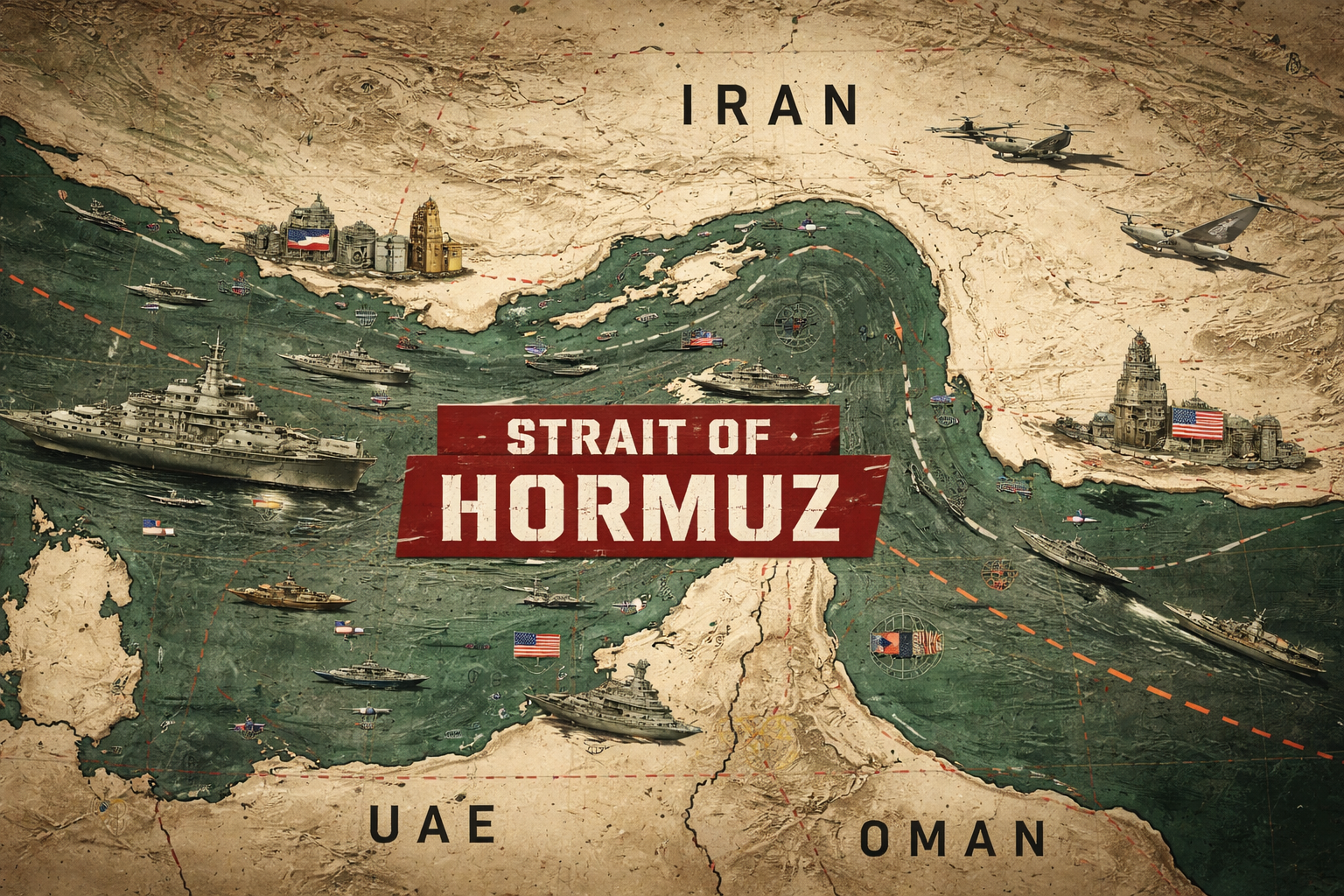
The Strait of Hormuz is located between Iran and Oman and connects the Persian Gulf to the Gulf of Oman and the Arabian Sea. Despite its narrow width, it is one of the most important maritime chokepoints in the world.
According to the International Energy Agency (IEA) and the U.S. Energy Information Administration (EIA), around 20 million barrels of oil pass through the strait each day, representing roughly 20 percent of global petroleum consumption. It is also a critical route for liquefied natural gas (LNG), especially exports from Qatar.
In international relations and negotiation studies, the Strait of Hormuz is often cited as a classic example of a strategic chokepoint where global economic interests are concentrated in a very limited geographic area.
Who Controls the Strait of Hormuz?
The strait is not controlled by any single power. Instead, it depends on a fragile balance of military capability, geography, and international maritime law.
Iran controls the northern coastline and possesses significant asymmetric military capabilities through the Islamic Revolutionary Guard Corps (IRGC), including coastal missile systems, drones, naval mines, and fast attack craft. These tools allow Iran to threaten or disrupt maritime traffic.
The United States maintains a substantial naval presence in the region, supported by several Gulf allies and Western partners. In 2026, this presence intensified amid growing tensions and renewed restrictions on Iranian oil exports.
From a strategic perspective, this is a textbook case of asymmetric power: neither side has total control, but both can strongly influence events.
Origins of the Current Crisis and Global Impact
The current crisis emerged after a gradual escalation in early 2026 following military strikes involving the United States and Israel against Iranian-linked facilities.
In response, Iran increased pressure in the Strait of Hormuz through actions such as targeting commercial vessels, deploying naval mines, and expanding drone activity near shipping lanes.
The reaction from global markets was immediate. Several shipping companies temporarily reduced or suspended transit through the area, leading to lower traffic volumes and sharply rising maritime insurance costs.
Oil prices surged above $100 per barrel and at times approached $120, according to market analysts and international energy observers. This increase added new inflationary pressure across major economies.
In Europe, higher energy prices pushed up gas and electricity costs. In Asia, particularly China, India, Japan, and South Korea, the impact was even greater because of heavy dependence on Gulf energy imports.
Global supply chains were also affected through delays, rerouted cargo, and higher freight costs. Emerging economies were among the most vulnerable to these shocks.
Applying the Mutual Gains Approach
The crisis can be analyzed through the principles of principled negotiation developed at Harvard Business School and the Harvard Negotiation Project.
Although public positions appear opposed, underlying interests may overlap. The United States seeks freedom of navigation, regional stability, protection of allies, and limits on nuclear escalation. Iran seeks national security, economic survival, relief from sanctions, and recognition of its regional role. Effective negotiation focuses less on stated positions and more on these underlying interests.
A mutual gains strategy would aim first to reduce tensions and create shared benefits. This could include a phased reduction in military activity, limited sanctions relief tied to compliance measures, secure shipping corridors monitored by neutral actors, and direct communication channels to prevent incidents at sea.
Successful agreements are stronger when based on neutral standards such as international maritime law, IAEA verification mechanisms, independent monitoring systems, and transparent compliance benchmarks.
A durable solution would likely require participation beyond Washington and Tehran, including Gulf states, European powers, China and India as major energy importers, and international institutions. This would transform a bilateral confrontation into a broader regional security dialogue.
Toward a Gradual Resolution
A realistic pathway out of the crisis could unfold in several stages. It would likely begin with immediate military de-escalation, followed by guarantees for commercial shipping traffic and the creation of monitoring and confidence-building measures. Over time, partial sanctions relief could be linked to verifiable commitments, eventually opening the door to broader regional talks on long-term security.
The 2026 Strait of Hormuz crisis highlights both the vulnerability of the global energy system and the risks of unresolved geopolitical rivalry.
It also demonstrates an important lesson in negotiation: even severe confrontations may contain opportunities for cooperation when parties focus on interests rather than rhetoric.
For policymakers, executives, and negotiation professionals, the key takeaway is clear: long-term stability depends not only on deterrence, but on the ability to build credible agreements based on shared interests.