
The US-Israel war against Iran and the prospects for negotiation are now among the main security issues in the Middle East. On 28 February 2026, a new phase of confrontation began in the Middle East when the United States and Israel launched a joint military operation against several Iranian facilities, targeting in particular military infrastructure and sites linked to Iran’s nuclear programme. According to the American and Israeli authorities, the aim of these operations was to prevent Iran from developing military nuclear capabilities.
These strikes quickly led to regional escalation. Iran retaliated with missile and drone attacks aimed at Israel as well as some American military positions and allied installations in the region. A few days later, on 2 March 2026, the conflict spread when Hezbollah entered the fray from Lebanon, opening a new front in the north of Israel. In response, the Israeli army carried out air strikes against Hezbollah positions, mainly in southern Lebanon and in certain parts of Beirut.
This dynamic is gradually turning the initial confrontation into a regional crisis involving several state and non-state actors, which makes any purely military solution difficult to envisage. In this context, negotiation and diplomatic de-escalation in the Middle East are becoming central questions.
A particularly complex negotiation configuration
Any attempt at a settlement will have to take into account the multiplicity of actors involved. The conflict is not limited to a direct confrontation between two states, but also involves armed organisations, regional alliances and international powers.
Three levels of dialogue could emerge:
The first would concern the indirect relations between the United States, Israel and Iran. The United States plays a central role in the current confrontation because of its participation in the military operations and its military presence in several Middle Eastern countries. In this context, any negotiation aimed at reducing tensions could involve indirect discussions between Washington and Tehran, as well as between Israel and Iran, probably through third-party states or international mediators. The discussions could address limiting military strikes, protecting civilian infrastructure and reducing the risks of regional escalation.
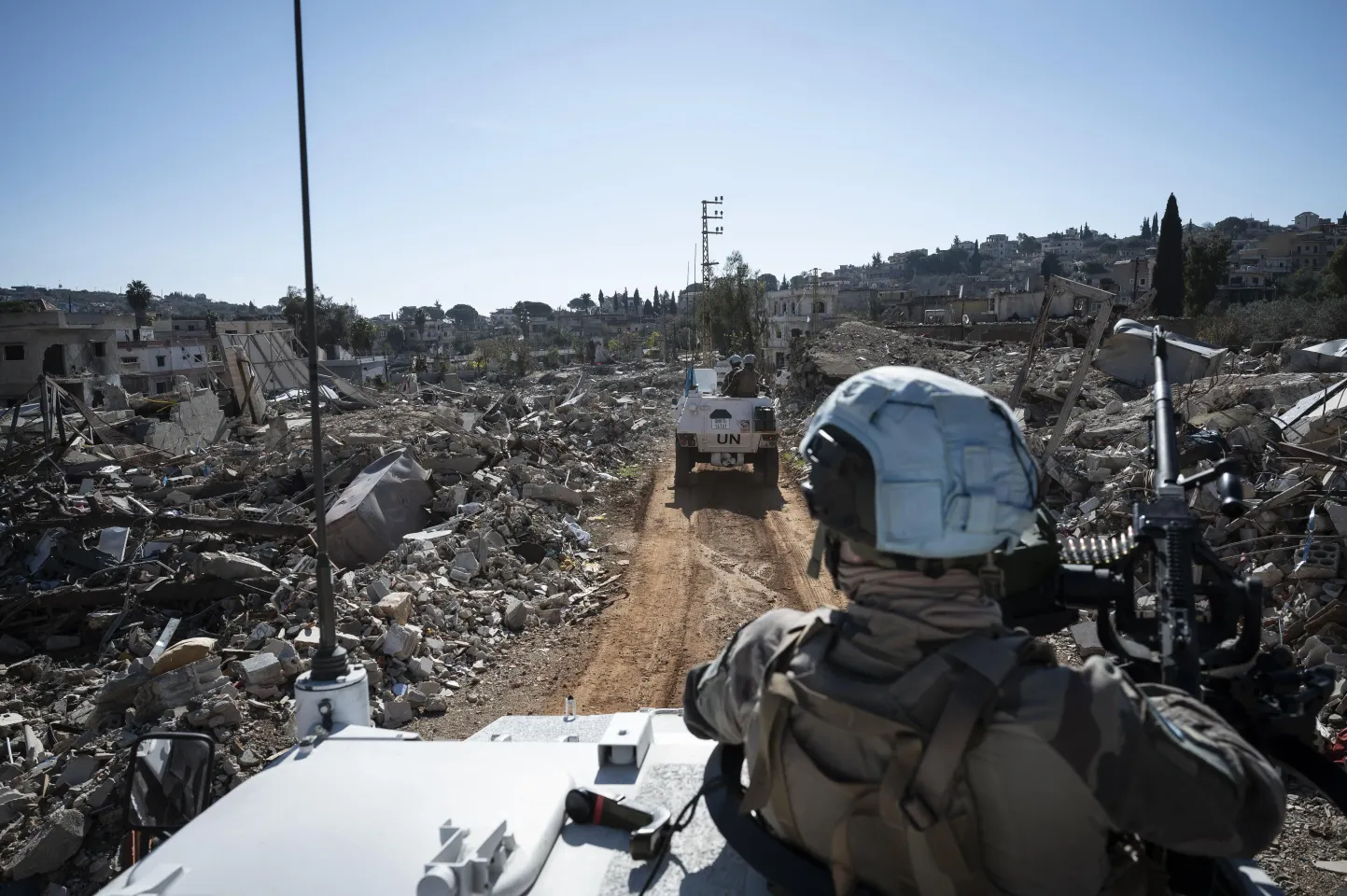
The second level concerns the Lebanese front, where the situation is particularly delicate. Hezbollah acts as a major military player but is not the Lebanese state itself. The Lebanese government thus finds itself in a difficult position: it seeks to avoid a large-scale war with Israel while also avoiding an internal confrontation with Hezbollah that could further destabilise the country.
In this context, several diplomatic avenues could be considered. One option would be to open direct talks between Israel and Lebanon, aimed at stabilising the border and avoiding wider military escalation. Such talks could address security arrangements in southern Lebanon, the prevention of missile fire from Lebanese territory, or the establishment of communication mechanisms to reduce the risk of military incidents.
Finally, a third level of negotiation could take the form of a broader regional dialogue, involving several Middle Eastern powers as well as international actors able to play a mediating role, notably the United States, certain European powers or Gulf states.
Identifying each actor’s interests
In prolonged crisis situations, negotiations become possible when the parties identify arrangements that can address, at least partially, their essential concerns.
From Israel’s point of view, the priorities mainly concern reducing the military threats coming from Iran and its regional allies, in particular the missile and drone capabilities that can reach its territory.
For the United States, the stakes include protecting its forces and military bases in the region, maintaining regional stability and limiting the Iranian military capabilities that could threaten its allies in the Middle East.
For Iran, the stakes include preserving its regional influence and protecting its strategic infrastructure against outside strikes.
Lebanon, for its part, is above all seeking to prevent its territory from becoming the theatre of a prolonged war, while the country is already going through a deep economic and political crisis.
Identifying these interests makes it possible to consider solutions that do not rest solely on the logic of military confrontation.
Possible de-escalation scenarios in the Middle East
In the current context of the US-Israel-Iran war, several diplomatic negotiation scenarios can be considered in order to limit regional escalation.
1. An agreement to cease hostilities
The most immediate scenario would be a negotiated ceasefire agreement, aimed at suspending military strikes and missile fire. Such an agreement could be accompanied by international monitoring mechanisms to limit violations and stabilise the situation.
2. A security arrangement in Lebanon
A second scenario could focus specifically on the Israeli-Lebanese border. The talks could aim to reduce the military capabilities present in certain sensitive areas, particularly in southern Lebanon. A stronger role for international peacekeeping forces could also be considered to limit the risk of direct clashes.
In this framework, direct dialogue between Israel and the Lebanese authorities could also play a role in stabilising the border, particularly around mechanisms to prevent military incidents and to limit the use of Lebanese territory as a platform for launching attacks.
3. A regional dialogue framework
In the longer term, a broader negotiation could include several issues related to regional security in the Middle East: the Iranian nuclear programme, ballistic capabilities and mechanisms to limit indirect confrontations between regional powers.
From this perspective, some arrangements could include security guarantees, military transparency mechanisms or commitments to reduce the risks of escalation.
Diplomacy as an alternative to escalation
At this stage, military operations continue and the balance of power remains uncertain. However, the recent history of the Middle East shows that even the most intense conflicts often end up opening spaces for diplomatic dialogue when the human, economic and political costs become too high for the various parties.
Wars can certainly alter the geopolitical balance and redefine power relations in the region. They can lead to new strategic configurations and have a lasting influence on relations between states. Nevertheless, the experience of international conflicts also shows that, sooner or later, the parties come back to the negotiating table to define arrangements that stabilise the situation.
In this context, diplomacy and negotiation remain essential tools for preventing today’s tensions from turning into wider international crises. Discussions aimed at addressing the security concerns of the various actors could thus help limit the risks of escalation and lay the foundations for agreements capable of preventing further confrontations in the future.